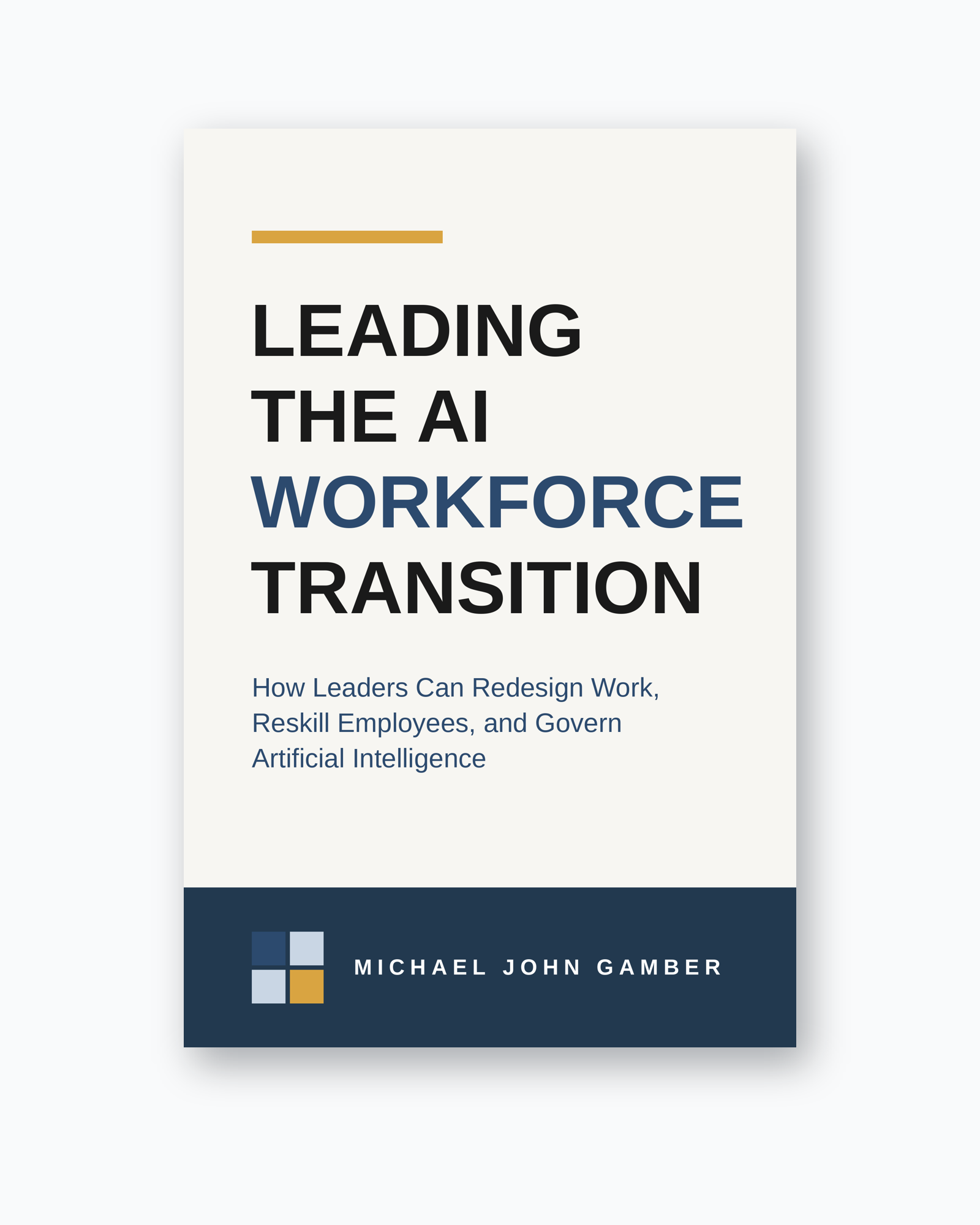
Leading the AI Workforce Transition
How Leaders Can Redesign Work, Reskill Employees, and Govern Artificial Intelligence
Michael John Gamber
Available now
Paperback, hardcover, and Kindle
AI disrupts tasks, not jobs.
AI transformations often fail not because the technology falls short, but because organizations deploy powerful tools into unexamined work. The book starts at the level where transformation actually happens, the task, and shows how work exposed to AI moves toward one of four outcomes: automation, augmentation, human-differentiated work, or new task creation.
A system for managing the transition
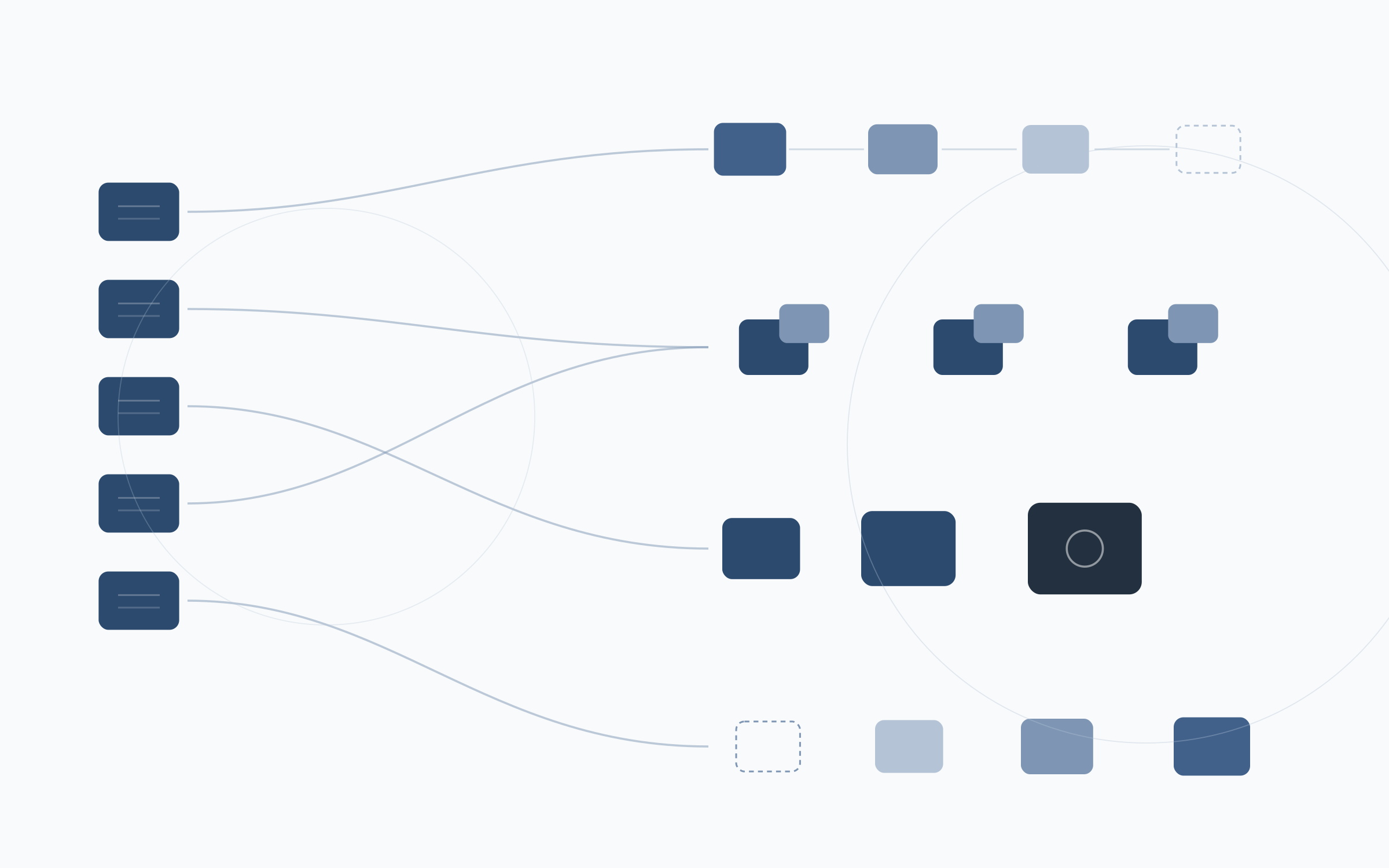
The AI Workforce Transition System is an operating system for the human side of AI. It combines five operational capabilities for mapping work, making workforce decisions, communicating change, developing capability, and governing AI, held together by the leadership discipline that makes them one system.
Task mapping
Understand work at the task level.
Workforce decisions
Make deliberate choices about how changing tasks affect roles and the workforce.
Communication
Prepare managers and employees for how work is changing.
Capability development
Build the skills required for redesigned work.
Governance
Establish accountability for how AI is deployed and used.
Leadership and integration
Connect the five capabilities into one operating system.
Built to move from framework to practice
The book includes ten practical workforce tools and a running composite case study that shows the system in action, from failed deployment through recovery to a working operating model.
10 Workforce Tools
Practical worksheets, diagnostics, and decision frameworks designed to put the system into use.
Reinvention Financial Services
A running composite case study that shows how the system operates across an AI workforce transition.